

Product managers
User feedback


You hit “send” on a survey to 2,000 users. You wait. Two weeks later, you check the dashboard: 43 responses. You refresh the page an hour later, hoping for a surge. Still 43.
This is the "ghost town" of product feedback, and it’s a scenario every product team knows too well. Beyond the immediate frustration, low response rates create a deeper, more systemic problem: The Feedback Gap. When only a fraction of your users respond, you aren’t getting a representative sample—you’re getting the "vocal minority."
Relying on skewed data to inform your product roadmap isn't just inefficient; it’s risky.
Let’s be honest: no one wakes up excited to fill out a survey. For most users, a survey email is just another notification competing for their limited "deep work" time.
The traditional email survey is built on a flawed premise: the assumption that users will gladly step out of their workflow to do your research for you. But as the effort increases, engagement plummets. Data shows that once a survey exceeds ten questions, completion rates drop by over 4%.
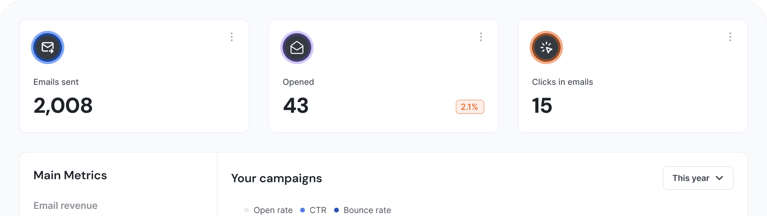
According to SurveyMonkey, average response rates hover between 5% and 30%. For many SaaS teams, that number ends up buried in the single digits. It’s not that users don’t like your product—it’s that your feedback mechanism is out of sync with their behavior.
The real issue isn't just the quantity of data; it’s the integrity of it.
When response rates are low, your data becomes inherently biased. Usually, you’re only hearing from two groups: your most passionate power users or your most frustrated critics. The "silent majority"—the average users who represent the bulk of your retention and growth opportunities—stay silent.
If your product decisions are shaped by partial insights, you’re essentially flying blind. To build a product that resonates with your entire user base, you need a more complete, accurate view of the user experience.
If the "old way" of chasing users via email is broken, what’s the alternative? Instead of trying to interrupt a user’s day, the most effective product teams are moving toward on-demand feedback ecosystems.
This is the philosophy behind Peppermint. We designed Peppermint to eliminate the friction of traditional user research. Stop hoping for an open rate and start accessing a community that is already primed to provide high-quality signals.
With Peppermint Surveys, we’ve bridged the gap between asking and learning. Our platform connects you directly with over 20,000 verified individuals who are actively looking to share their insights—from product-market fit to specific feature feedback.
Here is how we’re changing the feedback loop:
Ultimately, the quality of your product is a reflection of the quality of your insights. Some teams treat surveys as a checkbox. High-performing teams treat them as a competitive advantage. Peppermint is built for the latter.
You can try Surveys in Peppermint now to reach the right audience faster, ensuring your next publish isn’t met with silence, but with the actionable signals you need to grow. It’s live, it’s fast, and it’s built for the insights that actually matter.